Box Crusher

Heavy Hammer Box Series · Feed ≤1000mm · 20–300 t/h

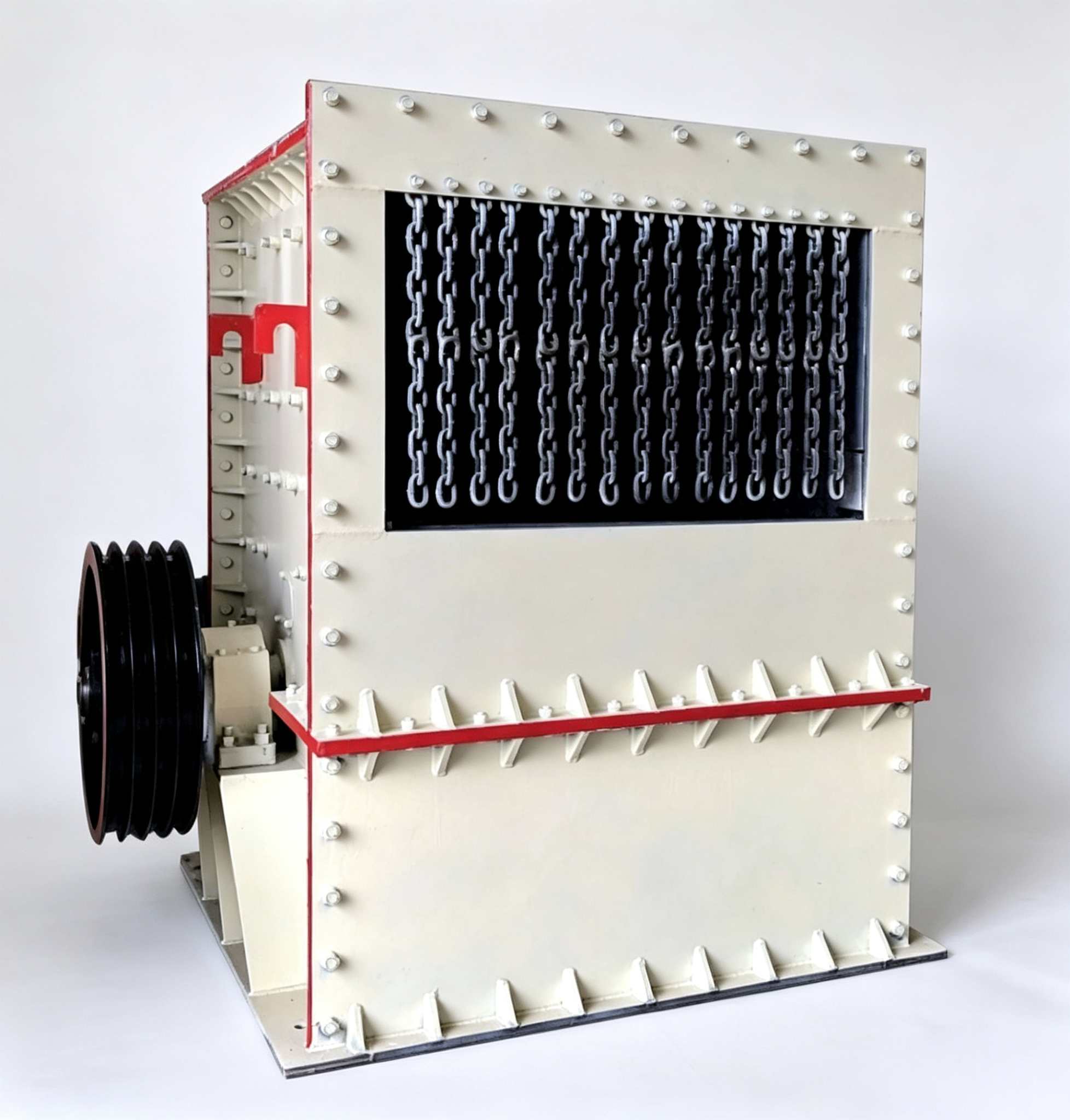
Box Crusher (Heavy Hammer Box Crusher) features a square box structure with multi-row heavy hammer rotors, capable of continuous primary and secondary crushing of large, high-hardness materials. The square box increases crushing chamber volume, providing strong impact force from heavy hammers — no clogging with wet materials, adjustable particle size, long wear-part life, and easy maintenance. 6 models cover 20-300 t/h, thePrimary crushing equipment for mining, building materials, chemical, and metallurgical industries.

Box Crusher

Product OverviewProduct Overview

The Box Crusher (Heavy Hammer Box Series) gets its name from its distinctive square box structure — compared to traditional hammer crushers with curved or round housings, the square box provides a larger crushing chamber volume, allowing large materials (up to 1000mm) to have longer residence time and more hammer strikes in the chamber. The equipment uses a high-speed rotor with multiple rows of heavy hammers, powered directly by an electric motor at 800-1200 rpm. The hinged heavy hammers spread out under centrifugal force, striking materials with extremely high kinetic energy. Crushed material rebounds from liners and impact plates back into the rotor zone for secondary striking until particle size is smaller than the grate gap. The Box Crusher handles high-hardness materials (granite, basalt, river pebbles, f≤15) effectively, and the high-speed rotor with strong airflow prevents clogging with sticky wet materials. The full series has 6 models with capacity from 20 to 300 t/h, ideal for primary and secondary crushing in mining operations.

Working PrincipleWorking Principle

1

Heavy Hammer High-Speed Impact on Large Materials

Large materials (≤500-1000mm) fall from the upper feed opening into the square crushing chamber. The motor drives the rotor at 800-1200 rpm; multiple rows of heavy hammers spread under centrifugal force, striking materials with extremely high kinetic energy. The large hammer mass and high linear speed cause extensive fragmentation of large blocks on the first impact.

2

Multiple Rebound and Continuous Crushing Inside the Square Box

Fragmented material flies at high speed toward the impact plates and wear liners on the inner walls of the square box. The spacious crushing chamber of the square box provides longer rebound paths and more rebound cycles. After each rebound, material falls back into the hammer rotation zone for further striking, achieving "continuous primary and secondary crushing" without requiring multiple machines in series.

3

Grate Screen Controls Final Particle Size Discharge

An curved grate screen set is installed at the bottom of the crushing chamber, serving both as final particle size control and grinding. Material smaller than the grate gap (10-30mm customizable) passes through and is discharged; larger material stays on the screen surface and is continuously ground by hammers until it passes through. Adjusting the grate gap width flexibly changes the upper and lower limits of discharge particle size.

Heavy Hammer Impact Crushing Path
Large material fed High-speed hammer impact fragmentation Multiple rebound crushing in square box chamber Hammer + grate grinding and screening Qualified particle size discharged

Technical ParametersHeavy Hammer Box Series Parameters

ModelCapacity (t/h)Feed Size (mm)Motor Power (kW)
700×80020-30≤50055
800×80030-50≤80075
1000×100050-80≤80090
1200×120080-90≤900110
1400×1400120-160≤1000160
1600×1600250-300≤1000160

※ Model naming: rotor diameter × rotor effective length (mm). Data based on medium-hard limestone (compressive strength ≤120MPa); capacity varies with material hardness and moisture content. Discharge particle size adjustable by changing grate screen set (default gap 15-25mm). Specifications subject to change without notice.

Structure ComponentsStructure Components

ComponentFunctionMaterial / Features
Square Box ShellSplit-type steel plate welded square box providing a large-volume crushing chamber. Upper feed opening, lower discharge opening; side access doors for easy hammer and grate replacement. Square structure provides more rebound space than curved shells, extending material residence and crushing timeQ345B medium-thick steel plate welded
Heavy Hammer RotorComposed of main shaft, multi-layer rotor discs, and heavy hammers. Each rotor disc has multiple pin holes around the circumference for hinged hammer attachment. Rotor undergoes strict dynamic balancing to ensure smooth, vibration-free high-speed rotation. Hammer mass is 2-3 times that of ordinary hammer crushers, greatly increasing impact kinetic energy42CrMo shaft + Q345B rotor discs
Heavy Hammer (Blow Bar)Core wear part with heavy structure (30-80 kg per hammer), hinged on the rotor disc via pin shafts. Hammers can rotate 360°, with wear occurring on each face — rotate 90° after each use to extend individual hammer life. Replace individually when worn to limit; no need for full set replacementZGMn13 high manganese steel / KmTBCr26 high chromium cast iron
Impact Plate & Wear LinerMounted on the inner walls of the box,Withstand high-speed material impacts, serving as both secondary crushing surface and chamber wall protection. The square box provides large impact areas on all four walls, giving long rebound paths and multiple strikes. Individual liner sections can be replaced without full-surface replacementZGMn13 / hardfacing wear layer
Grate Screen SetLocated above the discharge opening at the bottom of the crushing chamber, formed by multiple grate bars arranged in a curved grid with fixed gaps. Properly sized material passes through the grate gaps; oversized material is retained and ground further by hammers. Discharge size adjustable by changing grate sets with different gap specs (10-30mm)ZGMn13 / wear-resistant alloy cast steel
Drive System & BaseHigh-power 4P motor drives the rotor through a hydraulic coupler or V-belt. The entire machine is mounted on a steel-profile welded base with vibration-damping rubber pads or cast concrete foundation. Higher-spec models can include a soft starter to reduce starting current impact on the power grid4P motor + hydraulic coupler/V-belt

Product FeaturesProduct Features

Large Feed, One-Pass Shaping

1400×1400 and 1600×1600 max feed 1000mm, capable of accepting blasted run-of-mine material directly without pre-crushing equipment. Large material undergoes multiple hammer strikes and chamber wall rebounds in the square box, achieving <25mm qualified discharge in a single pass, saving one stage of crushing equipment investment.

No Clogging with Wet Materials, Strong Adaptability

The high-speed rotor generates strong airflow that quickly pushes sticky wet materials through the grate. The large square box volume and straight-through discharge path prevent high-clay or high-moisture materials from sticking to chamber walls and grates, effectively preventing blockages — this advantage is especially prominent in open-pit mining during rainy seasons.

Handles Both Soft and Hard Materials

Heavy hammers provide extremely high impact kinetic energy, effectively crushing not only medium-soft materials (limestone, coal, shale) but also high-hardness materials (granite, basalt, river pebbles, iron ore, etc.). One machine handles multiple applications without changing equipment type based on material hardness.

Flexible Discharge Size Adjustment

By changing the grate screen set with different gap specs (10-30mm), the discharge particle size range can be adjusted. The same machine can produce coarse aggregate (20-30mm), fine aggregate (10-20mm), or powder (<10mm) at different project stages, meeting various downstream process requirements.

High Wear Part Utilization, Easy Replacement

Hammers can be rotated 360° to use all faces, maximizing individual hammer life. Hammers are installed via hinged pin shafts — simply remove the cotter pin to replace a single worn hammer without disassembling the rotor or replacing the whole set. Wear liners use modular design for individual replacement, greatly reducing maintenance costs and downtime.

Full Series Covers Small to Large Scale

6 models cover the full capacity range of 20-300 t/h: 700×800 (20-30 t/h) for small quarries, 1200×1200 (80-90 t/h) for medium mines, 1600×1600 (250-300 t/h) for large aggregate production lines. Models available for all sizes, with flexible and scalable investment.
Application FieldsApplication Fields

Primary & Secondary Crushing for Mine Aggregate

The Box Crusher is especially suitable for coarse crushing of blasted run-of-mine ore. The large feed opening (max 1000mm) directly accepts large blasted ore, completing coarse and medium crushing in one pass, replacing the two-stage "jaw crusher + impact crusher" or "jaw crusher + cone crusher" process. Widely used in sandstone, granite, and basalt aggregate production lines.

Building Material Stone Processing

In the building stone processing industry, the Box Crusher serves as the main crushing equipment, directly crushing limestone, dolomite, sandstone, etc. from quarries into different grades of construction aggregate (crushed stone, chips, stone powder). The square box high-capacity advantage makes it especially suitable for large mixing stations with captive mines and commercial aggregate processing plants.

Chemical & Metallurgical Material Preparation

In crushing operations for chemical raw materials (phosphate rock, pyrite, barite) and metallurgical additives (limestone flux, dolomite, fluorite), the Box Crusher is widely adopted for its hard rock adaptability and high capacity. The 1600×1600 model can handle 250-300 t/h of raw material crushing, meeting the supply needs of large chemical plants and steel mills.

River Pebble & High-Hardness Material Crushing

River pebbles (siliceous cobblestone, quartzite) are high-hardness with high silica content, causing extremely short hammer life in ordinary hammer crushers. The Box Crusher's heavy hammers with high-chromium cast iron efficiently crush river pebbles while maintaining economical hammer life, producing high-quality manufactured sand and aggregate.

Limestone AggregateGraniteBasaltRiver GravelIron OrePhosphate RockSandstoneDolomiteFluorite

Selection AdviceSelection Advice

  1. Select by Capacity & Feed Size: Small quarries (20-50 t/h) choose 700×800 or 800×800; medium mines (50-90 t/h) choose 1000×1000 or 1200×1200; large aggregate lines (120-300 t/h) choose 1400×1400 or 1600×1600. Feed size must be strictly less than the model's maximum feed value, otherwise large blocks may jam the feed opening or damage hammers.
  2. Select Hammer Material by Material Hardness: For medium-soft materials (limestone, coal, gypsum), recommend ZGMn13 high manganese steel hammers — the surface work-hardens under impact, becoming harder with use. For high-hardness, highly abrasive materials (granite, basalt, quartzite), recommend KmTBCr26 high chromium cast iron hammers with hardness HRC 58-62, offering 2-3 times the wear resistance of high manganese steel.
  3. Match Grate Gap to Downstream Needs: With cone crusher or sand maker downstream, choose 25-30mm gap (coarse crushing). With mill downstream, choose 15-20mm gap (medium-fine crushing). For direct aggregate product, choose 10-15mm gap. Smaller gaps reduce capacity — balance particle size and capacity requirements.
  4. Motor Configuration & Start Method: Small machines under 90kW can use direct full-voltage start. For 110kW and above, recommend hydraulic coupler or soft starter to reduce starting current peak impact on the grid and mechanical components. For the 1600×1600 model (160kW), soft start is strongly recommended with adequate transformer capacity.

Need Box Crusher? Contact us for selection advice and detailed quote