Home Products Projects About Us Contact Us

Ceramic Ball Mill

φ910 – φ4000 · Batch Type

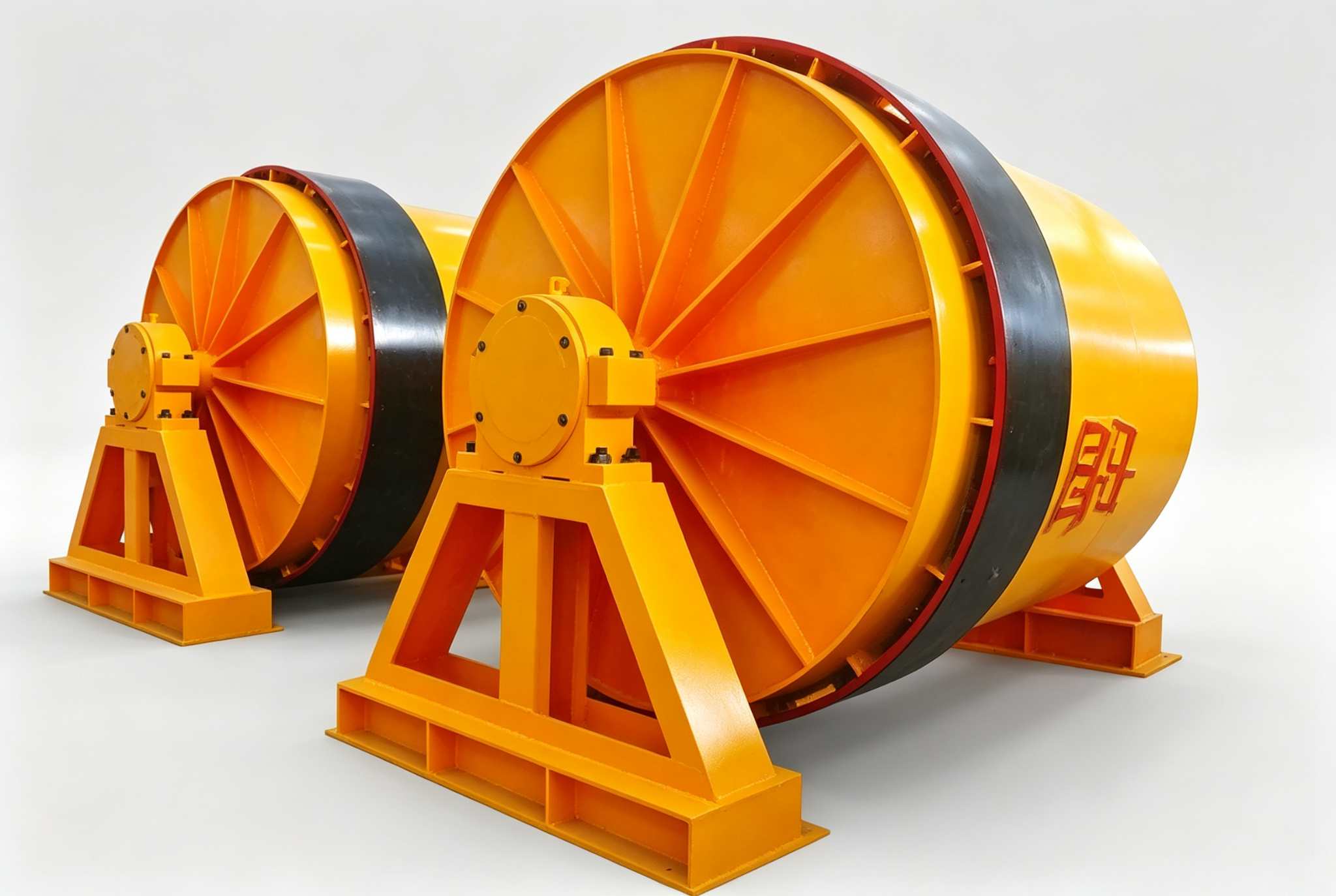
Full ceramic grinding components, completely eliminating metal contamination. Dry/wet dual use, uniform fineness. Liner types can be adapted as needed, suitable for mixing and grinding of general and specialty materials.

Ceramic Ball Mill

Product OverviewProduct Overview

The Ceramic Ball Mill is mainly used for material mixing and grinding, producing uniform fineness while saving power. It can be used for both dry and wet grinding. The machine can use different liner types according to production needs. Grinding fineness is controlled by grinding time. The motor uses auto-transformer step-down starting to reduce starting current. The structure comes in integral and independent types. This product features low investment, energy savings compared to similar products, novel structure, easy operation, safe use, and stable reliable performance, suitable for mixing and grinding of ordinary and special materials. Using high-purity alumina ceramic liners and ceramic grinding balls, the metal impurity content in the powder is as low as 0.001% or less, ensuring material purity from the source.

Working PrincipleWorking Principle

1

Loading

Load the material to be ground and ceramic grinding balls into the ceramic-lined cylinder in proportion. Material moisture recommended ≤3%; oversized material requires pre-crushing.

2

Grinding

The motor drives the cylinder to rotate at 10-35 r/min through a reducer. Ceramic balls inside the cylinder are carried up by centrifugal force and then fall, producing impact and grinding action on the material.

3

Self-Controlled Fineness

Grinding fineness is self-controlled by grinding time; extending grinding time produces finer powder (80-400 mesh). No metal contact throughout the process inside the cylinder, ensuring material purity.

4

Discharge

Stop and discharge when target fineness is reached. For wet grinding, use a slurry pump for discharge; for dry grinding, use screening and classification. Coarse particles can be returned for re-grinding.

Power Transmission Path
Motor Reducer Cylinder Ceramic Liner Ceramic Grinding Ball Material

Technical ParametersTechnical Parameters

Model Cylinder Size (mm) Charge Weight (t) Cylinder Speed (r/min) Motor power (kW) Output (t/h) Weight (t)
1120Φ9100.2352.20.21.91
1420Φ12000.531.4540.52.5
1800Φ14001277.513
2100Φ18001.523111.54.5
2600Φ22002.52018.52.56.5
2600Φ22003202237
3000Φ250051637513
3400Φ2800813.845819
4000Φ28001013.8551020
5000Φ30001513751528
5000Φ31001812901828.5
5800Φ32002013902029.9
6500Φ34003014.21103032
7000Φ360040131324036
8000Φ380050112005045
8500Φ400060102006052

※ Specifications subject to change without notice. Charge weight is per batch. Output depends on material properties and grinding time.

Structure ComponentsStructure Components

Component Function Material / Features
Cylinder Steel cylindrical thin-wall shell, carrying material and grinding media during rotation, available in integral and independent structures. Steel plate welded, ceramic lining inside
Ceramic Liner Protects the steel cylinder while serving as the grinding work surface to lift grinding balls High-purity alumina ceramic, hardness ≥HRA85
Ceramic Grinding Ball Falls and impacts in the cylinder to grind material, with multi-level gradation for improved grinding efficiency Alumina/Zirconia Ceramic Ball
Drive Device Drives the cylinder at set speed, with auto-transformer step-down start to reduce starting current Motor + Reducer + Coupling
Feed Port Batch feed entrance, with sealed cover to prevent dust overflow. Stainless Steel / Ceramic Chute
Discharge Port Discharges slurry or dry powder after grinding, can be equipped with screen mesh to retain grinding balls. Stainless Steel Discharge Valve
Bearing Housing Supports stable rotation at both cylinder ends, bearing radial load Cast Steel Bearing Housing + Self-aligning Roller Bearing

Product FeaturesProduct Features

Contamination-Free Grinding

All key components use high-purity ceramic materials (liner + grinding balls), with no metal contact. Powder metal impurity content ≤0.001%, meeting strict purity requirements for ceramics, pharmaceuticals and other industries.

Uniform & Controllable Fineness

Grinding fineness is self-controlled by grinding time, producing uniform fineness with small particle deviation. By adjusting grinding duration, can stably produce 80-400 mesh powder.

Low Investment, Energy Saving

More energy-efficient than similar products, with low initial investment. Auto-transformer step-down start reduces starting current impact, with economical and reasonable operating power consumption.

Flexible Liner Adaptation

Different liner types can be selected based on material characteristics — high-alumina liner, medium-alumina liner, rubber liner, etc. One machine for multiple uses to meet different working conditions.

Dry & Wet Dual Use

Can be used for both dry and wet grinding, adapting to different process routes. Wet grinding with slurry pump enables continuous slurry production.

Wear-Resistant, Long Life

Ceramic liner hardness ≥HRA85, wear resistance more than 5 times that of metal liners. Liner life can reach 15,000-20,000 hours, with long maintenance intervals.

Simple & Safe Operation

Simple structure, reliable operation, easy maintenance. Integral and independent structures available for selection. Workers can operate independently after short-term training.
Application FieldsApplication Fields

Ceramics Industry

Fine grinding of ceramic body materials and glazes. Raw materials such as feldspar, quartz, and clay are wet-ground into slurry for daily-use ceramics, architectural ceramics, and sanitary ceramics production.

Electronic Materials

Ultra-fine grinding of electronic ceramic powders, alumina substrate materials, and MLCC dielectric materials, for applications with extremely strict metal impurity content requirements.

Chemical & New Materials

Fine grinding of non-metallic minerals such as kaolin, calcium carbonate, talc, and bentonite. High-purity preparation of coating-grade and filler-grade powders.

Specialty Materials

Grinding of refractory materials, glass raw materials, pigments, pharmaceutical excipients, and other materials with strict whiteness and purity requirements, eliminating quality degradation caused by iron contamination.

Feldspar Quartz Sand Kaolin Clay Glaze Calcium Carbonate Talc Bentonite Alumina Refractories

Selection AdviceSelection Advice

  1. Batch Output Matching: For laboratory or small batch production (0.2-1 t/batch), choose models 1120~1800. For pilot or small-scale lines (1.5-5 t/batch), choose models 2100~3000. For large-scale production (8-60 t/batch), choose models 3400~8500.
  2. Liner Selection: For ceramic raw materials with extremely high whiteness requirements, choose high-alumina liner (Al₂O₃≥92%). For general grinding, choose medium-alumina liner. For conditions requiring high impact toughness, rubber liner is optional.
  3. Grinding Ball Gradation: Large balls (Φ40-60mm) for coarse grinding, medium balls (Φ25-40mm) for medium grinding, small balls (Φ15-25mm) for fine grinding. Recommended ratio large:medium:small ≈ 3:4:3.
  4. Dry vs Wet Grinding: Wet grinding has higher discharge efficiency and less dust, suitable for slurry processes. Dry grinding has a simpler process and is suitable for moisture-sensitive materials. Decide based on the downstream process route.

Interested in Ceramic Ball Mill? Contact us now for a quote and solution