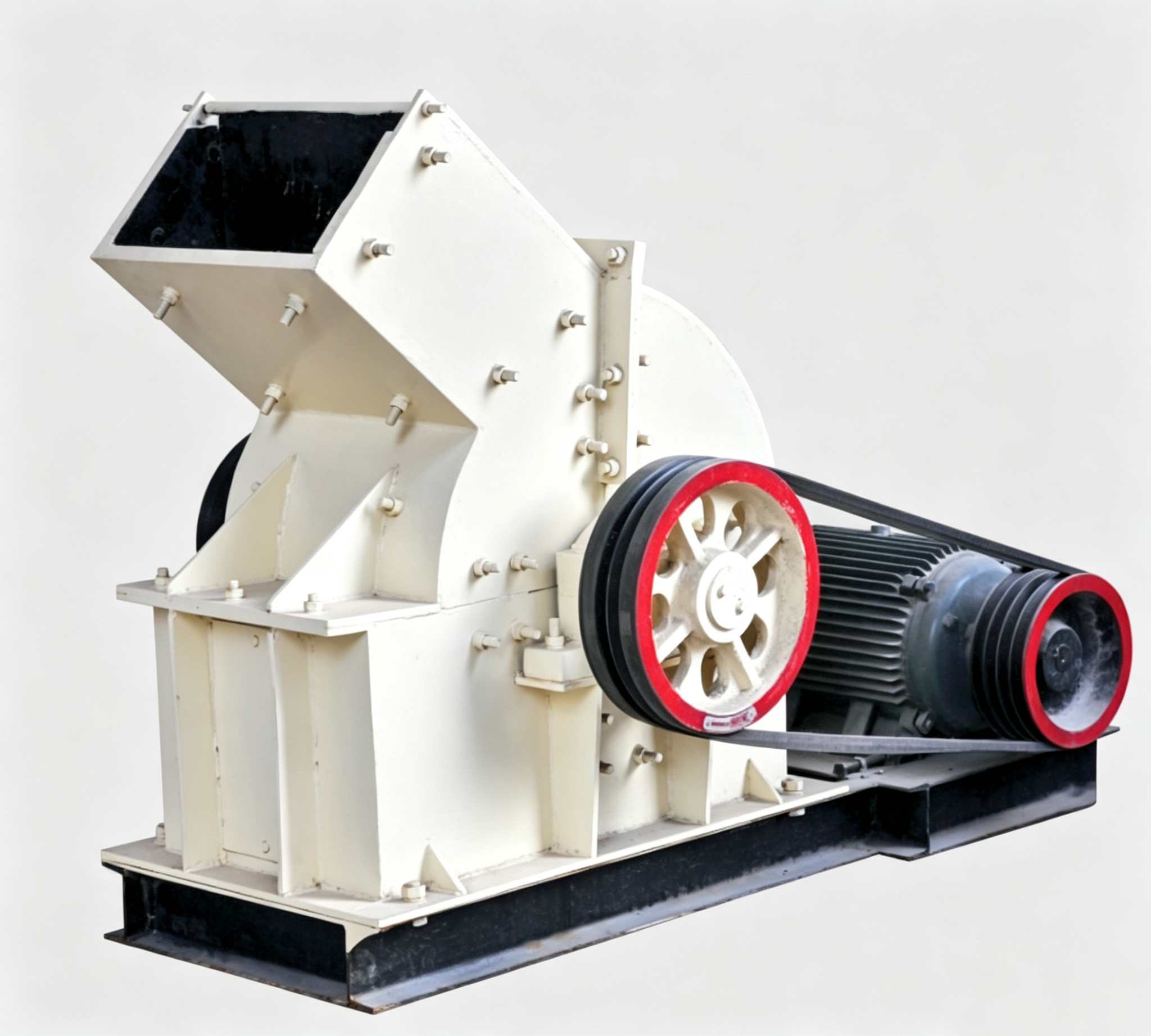
Hammer Crusher

PC Series · Feed ≤400mm · 2–75 t/h

Hammer Crusher uses high-speed rotating hammer impact to crush materials. Simple structure, high crushing efficiency, large crushing ratio, uniform product particle size. It is one of the mainstream equipment for fine crushing limestone, coal or other brittle materials below medium hardness in metallurgy, building materials, chemical and hydropower industries. PC Series covers small to medium-large, suitable for raw material crushing in small factories, brick plants, refractory material plants, etc.

Hammer Crusher

Product OverviewProduct Overview

Hammer Crusher (PC Series) uses high-speed rotating hammer heads on the rotor to impact materials. The motor drives the rotor via V-belts at high speed (hammer tip speed up to 25-50 m/s). Hammers hinged on the rotor disc spread radially under centrifugal force, striking feed material with extremely high kinetic energy. After impact breakage, material flies at high speed toward impact plates and grate bars inside the crushing chamber, where it undergoes further grinding and extrusion until particle size is smaller than grate slot width and discharges. Hammer Crusher features a large single-stage crushing ratio (up to 15-30), capable of reducing 100-400mm feed to <15mm in one pass without multi-stage crushing — the core equipment for the "more crushing, less grinding" energy-saving process route. PC Series ranges from small PC200×300 (2-4 t/h) to medium PC800×1000 (20-75 t/h), with 6 models covering medium-fine crushing needs for laboratories, brick plants, cement plants, chemical plants and various scales.

Working PrincipleWorking Principle

1

High-Speed Hammer Impact

The motor drives the rotor at 800-1500 rpm via V-belts. Hammers hinged on the rotor disc fully extend under centrifugal force. Material falls from the upper feed opening and is struck by high-speed (25-50 m/s tip speed) rotating hammers, instantly fragmenting.

2

Impact plate and grate grinding

Material rebounds off impact plates for secondary crushing. Oversize is repeatedly compressed and ground between hammers and grate bars.

3

Grate Screen Controls Discharge Size

An arc-shaped grate screen (slot width 5-15mm) is installed at the bottom of the crushing chamber, serving dual screening and grinding functions. Material smaller than the grate slots passes through, while larger material continues to be struck and ground by hammers until all passes through. Discharge size can be adjusted by replacing grates with different slot widths.

Hammer Impact Crushing Path
Material feed Hammer high-speed impact crushing Impact plate rebound secondary crushing Grate bar grinding & screening Qualified size discharge

PC SeriesTechnical ParametersPC Series Parameters

ModelHammersFeed Size (mm)Discharge Size (mm)Capacity (t/h)Motor Power (kW)Weight (t)
PC200×3009<100<152-44P-5.50.5
PC400×30016<100<155-74P-110.8
PC350×50020<100<158-154P-151.2
PC600×40020<220<1510-254P-221.5
PC800×60024<350<1520-504P-553.8
PC800×100028<400<1520-754P-955.5

※ Based on limestone (compressive strength ≤120MPa), discharge size <15mm (adjustable by changing grate gap). Output varies with material hardness and moisture content. Technical data subject to change without notice.

Structure ComponentsStructure Components

ComponentFunctionMaterial / Features
Rotor Disc & Main ShaftComposed of multiple layers of circular rotor discs mounted on the main shaft, each layer with evenly distributed pin holes around the circumference for hinging hammers. Rotor is dynamically balanced for smooth high-speed operation. Main shaft supported by double-row spherical roller bearings at both ends45# Steel Main Shaft + Q345B Rotor Disc
Hammer (Blow Bar)Core wear part of hammer crusher, hinged on rotor disc via pins. Spreads radially under centrifugal force during high-speed rotation, striking material with high kinetic energy. Hammers reversible for double-sided use, fully utilizing wear allowance at both endsHigh manganese steel ZGMn13 / High chromium cast iron
Impact Plate (Liner)Wear-resistant liner installed on crushing chamber inner wall, bearing high-speed impact of material flung by hammers, providing secondary crushing and chamber wall protection. Surface can have cast strip or wave-shaped wear-resistant teeth.ZGMn13 High Manganese Steel Liner
Grate Screen (Grate Set)Arc-shaped grid assembly at the bottom of the crushing chamber, consisting of dozens of grate bars arranged at fixed intervals. Serves dual screening and grinding functions — qualified material discharges through grate slots, unqualified material continues being ground by hammers. Discharge size adjustable by replacing grates with different slot sizes.ZGMn13 / Wear-resistant Cast Steel
Crushing Chamber ShellSplit upper/lower steel plate welded shell, bearing material impact and airflow pressure from high-speed hammer rotation. Feed port at top, discharge opening at bottom. Side maintenance door for convenient hammer and grate replacement.Q345B Steel Plate Welded
Drive and FrameElectric motor drives the rotor via V-belts. Frame is a steel welded base, mounted on vibration pads or concrete foundation. Small models with direct motor drive, medium-large models with hydraulic coupler soft start.4P Motor + V-belt / Coupler

Product FeaturesProduct Features

Large Crushing Ratio, One-Pass Shaping

Can crush 100-400mm large material to <15mm in one pass, with single-stage crushing ratio up to 15-30. For medium-soft materials like limestone, PC800×600 can replace the "jaw crusher + impact crusher" two-stage process, saving one machine and one conveyor section.

Simple Structure, Easy Maintenance

The whole machine consists of four parts: rotor + hammers + grates + shell, with no complex transmission or hydraulic systems. Hammers are suspended via pins — just remove the pin for quick replacement. Grates can be individually extracted through the side maintenance door.

Adjustable Discharge Size

By replacing grate screen sets with different slot sizes (5-15mm), the discharge size upper limit can be flexibly adjusted. The same machine can produce 0-5mm fine powder or 5-15mm coarse sand under different conditions, meeting various downstream process needs.

High Production Capacity, Low Energy

High energy utilization efficiency of hammer impact crushing, with power consumption only 1-2.5 kWh per ton. PC800×1000 with 95kW installed power achieves 75 t/h capacity, far lower than the jaw crusher + impact crusher combination at the same capacity.

Adapts to Wet Material, No Clogging

High-speed hammer rotation generates strong airflow that quickly blows high-moisture sticky materials (wet limestone, clay) through grates without clogging. This makes the hammer crusher superior to jaw and roller crushers under rainy and wet material conditions.

Full Model Range, Small to Medium

PC200×300 (0.5t) suitable for laboratories and micro brick plants, PC800×1000 (5.5t) suitable for small-medium quarries and cement plants. 6 models cover the full 2-75 t/h capacity range with low investment threshold, suitable for users of all scales.

Application FieldsApplication Fields

Cement & Building Material Crushing

Cement plants use the hammer crusher to reduce 200-350mm quarry limestone to <15mm in one pass, directly feeding the raw mill. Single-stage hammer crusher replaces "jaw+impact crusher", reducing investment and operating costs — standard for small-medium cement lines.

Coal Mine & Coking Fine Crushing

The hammer crusher is the main fine crushing equipment before coal washing, reducing 100-300mm raw coal to <15mm before washing. In coking plants, it fine-crushes coking coal to <3mm, meeting stamp-charged coke furnace feed requirements.

Brick Making & Refractories

Small PC200×300 and PC400×300 are standard crushing equipment in brick plants and refractory plants, crushing shale, coal gangue, clay and other raw materials to <5mm for direct brick making. Compact equipment, low investment, suitable for local raw material processing in township small factories.

Chemical & Metallurgical Raw Material Preparation

The chemical industry uses the hammer crusher to fine-crush phosphate rock, gypsum and potassium salt. The metallurgical industry uses it for crushing sinter and limestone flux, providing qualified-size materials for blast furnaces and sintering machines.

LimestoneCement Raw MealRaw CoalCoking CoalShale BrickRefractoriesPhosphate RockGypsumPotassium Salt

Selection AdviceSelection Advice

  1. Select Model by Capacity and Feed Size:Small brick plants (5-15 t/h, feed <100mm): PC350×500 or PC400×300; medium cement plants (20-50 t/h, feed <350mm): PC800×600; larger capacity: PC800×1000. Feed size must be less than the model's maximum rating, otherwise material jamming or hammer damage may occur.
  2. Material Hardness Determines Suitability:Hammer crusher is best suited for brittle materials with Mohs hardness f≤8 (limestone, coal, gypsum, shale). For hard rock with f>10 (granite, basalt), hammer wear is extremely fast (only tens of hours) with poor economy — switch to jaw or cone crushers for such conditions.
  3. Grate Slot Width Controls Discharge Size:Standard configuration: 15mm grate slots (discharge <15mm). For finer discharge (<5mm), custom 5-8mm grate slot sets available. Note: smaller slots mean lower capacity and increased clogging risk — wet materials should use wider slots.
  4. Hammer Material and Spare Parts Planning:For medium-soft materials (limestone, coal): high manganese steel hammers recommended, life about 400-800 hours/side (reversible, total 800-1600 hours both sides). For highly abrasive materials (high quartz limestone): high chromium cast iron hammers. Recommend keeping 1 spare set of hammers and 1 spare set of grates for quick replacement without production interruption.

Need Hammer Crusher? Contact us for selection advice and quote