Home Products Projects About Us Contact Us

Shaking Table

6-S Series · 7.5 m² Dressing Area

The fiberglass shaking table is a high-efficiency gravity mineral processing equipment for fine-grained ore separation. Widely used for roughing, cleaning and scavenging of tungsten, tin, tantalum, niobium and other rare metals, as well as gold and silver precious metal ores. Also suitable for iron, manganese ores and non-metallic ores such as mica. LS/YS dual models, stroke 8-30mm adjustable, enrichment ratio up to 100 times.

Shaking Table

Product OverviewProduct Overview

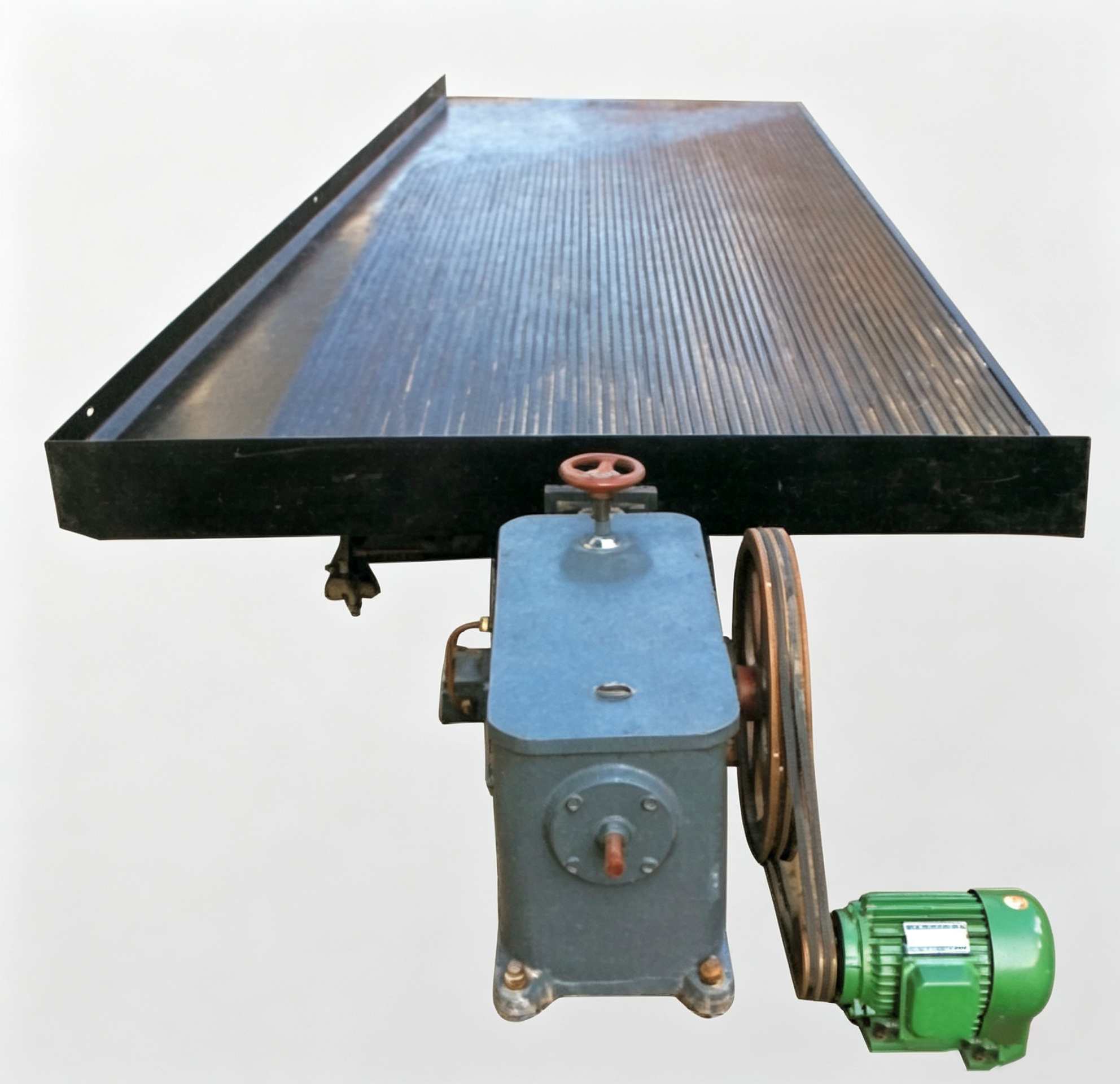
The Shaking Table is one of the core gravity beneficiation equipment, with nearly a century of application history. The first eccentric toggle-type shaking table was made by A. Wilfley in 1896, followed by multiple transmission mechanism innovations. XingQing Machinery LS/YS (6-S) fiberglass shaking table uses a crank-rod drive mechanism, with a deck made of polyester fiberglass embedded skeleton composite structure, dressing area 7.5 m², available in left-hand and right-hand directions. Both stroke (LS 10-30mm / YS 8-22mm) and frequency (240-360 strokes/min) are adjustable. Suitable for precise separation of three particle size grades: coarse sand (2-0.5mm), fine sand (0.5-0.074mm) and slime (<0.074mm). A single operation can simultaneously produce concentrate, middlings and tailings.

Working PrincipleWorking Principle

1

Feed and spreading

Pulp is fed from the feed trough at the upper corner of the deck, while the water trough supplies transverse wash water. The mineral particle group spreads uniformly on the inclined deck surface (0-5°), forming a thin-layer pulp flow.

2

Asymmetric reciprocating stratification

The deck is driven by the transmission mechanism in asymmetric reciprocating motion — forward slow then fast, backward fast then slow. Heavy minerals settle to the bottom layer under inertia and friction forces, moving longitudinally along the deck; light minerals suspend in the upper layer and are washed away by transverse water flow.

3

Fan-shaped discharge separation

Mineral particles of different densities and sizes flow down in a fan shape along their respective trajectories. Heavy minerals discharge near the concentrate end, while light minerals and tailings flow out from the tailings side. By adjusting the position of the cut-off baffles, concentrate, middlings and tailings are collected separately.

Asymmetric Reciprocating Motion + Crossflow Film Separation
Pulp + wash water fed Inclined deck reciprocating (forward slow → backward fast) Heavy minerals settle to bottom, move longitudinally Light minerals washed away transversely Fan-shaped spread Concentrate / Middlings / Tailings discharged

Model ComparisonModel Comparison — LS vs YS

LS (6-S) Type

  • Stroke10-30 mm
  • Frequency240-360 strokes/min
  • Applicable OreTungsten, Tin, Tantalum, Niobium, etc.
  • FeaturesLarge stroke, strong stratification, suitable for high-density minerals

YS (6-S) Type

  • Stroke8-22 mm
  • Frequency240-360 strokes/min
  • Applicable OreGold, Silver, Lead-Zinc, etc.
  • FeaturesSmall stroke, high-frequency vibration, suitable for fine precious metals

Technical ParametersTechnical Parameters

ItemLS (6-S)YS (6-S)
Deck StructurePolyester FRP, embedded frame composite structurePolyester FRP, embedded frame composite structure
Deck Specification1500-1850 × 4500 mm1500-1850 × 4500 mm
Dressing Area7.5 m²7.5 m²
Deck DirectionLeft-hand / Right-handLeft-hand / Right-hand
Cross Slope0-5°0-5°
Stroke10-30 mm8-22 mm
Frequency240-360 strokes/min240-360 strokes/min
Feed Particle SizeCoarse 2-0.5mm / Fine 0.5-0.074mm / Slime <0.074mmCoarse 2-0.5mm / Fine 0.5-0.074mm / Slime <0.074mm
Capacity15-108 t/day15-108 t/day
Feed Concentration15-30%15-30%

※ Technical data subject to change without notice.

Structure ComponentsStructure Components

ComponentFunctionMaterial / Features
Headstock (Drive Mechanism)Crank-rod type structure, converting rotary motion to asymmetric longitudinal reciprocating motion of the deck through the drive chain: motor → pulley → crankshaft → rocker → toggle plate → reciprocating rod.Cast/Forged Steel, spring in enclosed box
Electric MotorDrives large pulley to rotate the crankshaft, providing transmission power. Moderate power, low energy consumption.Y Series Energy-saving Motor
Slope AdjusterAdjusts the cross slope angle (0-5°) of the deck, changing pulp retention time and water flow distribution on the deck.Screw / Worm Gear Lifting Mechanism
DeckCore separation work surface, trapezoidal or diamond shape, with longitudinal riffles (deck bars) decreasing in height from the drive end to the opposite side, guiding mineral particles to separate by density.Polyester FRP, Embedded Skeleton Composite Structure
Feed Trough + Water TroughFeed trough delivers pulp evenly to the upper corner of the deck; water trough supplies transverse wash water along the inclined side, forming a uniform water film.Stainless Steel / Wear-resistant Plastic
Riffles (Deck Bars)Raised strips arranged longitudinally along the deck, generating turbulence to promote mineral stratification, with height decreasing toward the discharge end to guide mineral particle movement direction.Rubber / Polyurethane
Lubrication SystemAutomatic or manual lubrication of moving parts such as crankshaft, bearings and toggle joints to reduce wear and extend critical component life.Oil Cup / Automatic Lubricator

Product FeaturesProduct Features

Ultra-High Enrichment Ratio

Single operation enrichment ratio can reach over 100 times, with significant concentrate grade improvement. For tungsten, tin and other minerals with large density differences, can directly produce high-grade concentrate, reducing subsequent cleaning stages.

Multi-Fraction Adaptability

By adjusting stroke, frequency and cross slope, the same machine can handle three particle fractions: coarse sand (2-0.5mm), fine sand (0.5-0.074mm) and slime (<0.074mm) — three fractions with one machine.

Three Products in One Pass

Single operation simultaneously produces concentrate, middlings and tailings. Separation process is visible, allowing operators to observe zoning effects in real-time and adjust cut positions for easy management.

Pure Physical Beneficiation, Zero Reagents

Relies entirely on gravity separation, with no chemical flotation reagents added. No wastewater pollution risk, environmentally compliant, concentrate products are not affected by chemical residues, suitable for green mine construction.

FRP Deck, Corrosion-Resistant Long Life

Polyester FRP embedded frame composite structure: lightweight, high strength, acid/alkali corrosion resistant, moisture-proof with no deformation. No degradation in long-term use with acidic or alkaline pulp, design life far exceeds wooden or iron deck shaking tables.

Compact Spring Box

Spring enclosed in a sealed box for compact structure and small footprint. Convenient slope adjustment, stroke adjustment without shutdown. Daily maintenance only requires periodic fastener check and lubrication, with stable operation and low noise.

Application FieldsApplication Fields

Tungsten & Tin Cleaning

The shaking table is the core cleaning equipment in tungsten-tin gravity separation plants, processing 2-0.22mm particle sizes. LS model with large stroke suits high-density tungsten-tin ore. Combined with jig or spiral chute rough concentrate, one pass shaking table cleaning produces qualified concentrate.

Tantalum, Niobium & Rare Metals

Tantalum-niobium ore has large density difference from gangue, giving the shaking table extremely high separation efficiency. LS model can upgrade Ta-Nb concentrate grade from 5-10% in jig rough concentrate to 40-60%, making it an indispensable cleaning and scavenging device in Ta-Nb concentrators.

Gold & Silver Recovery

YS model with small stroke and high-frequency vibration is especially suitable for fine gold and silver recovery. Configuring a shaking table in the grinding circuit of placer and rock gold mines can recover liberated coarse gold in advance, reduce over-grinding losses, and improve overall recovery by 3-5%.

Iron & Manganese Tailings Re-treatment

Magnetic separation plant tailings often contain insufficiently liberated fine iron minerals. The shaking table can recover hematite and specularite fines from magnetic tailings, and can also be used for coarse enrichment of manganese and chromite ores, turning waste into value.

TungstenTinTa-NbGoldSilverLead-Zinc OreIron OreManganese OreMicaBarite

Selection AdviceSelection Advice

  1. Select LS or YS by Mineral Type:High-density minerals (tungsten, tin, tantalum, niobium): LS model (stroke 10-30mm) with strong stratification for efficient separation; precious metals and low-density minerals (gold, silver, lead-zinc): YS model (stroke 8-22mm) for fine gold recovery with small stroke high-frequency vibration.
  2. Adjust Parameters by Feed Particle Size:Coarse sand (2-0.5mm): large stroke (22-30mm) and lower frequency (240-280 strokes/min); fine sand (0.5-0.074mm): medium stroke (14-22mm) and medium-high frequency (280-320 strokes/min); slime (<0.074mm): small stroke (8-16mm) and high frequency (320-360 strokes/min) to ensure fine particles are fully loosened and stratified.
  3. Left/Right by Plant Layout:Left and right types have identical performance, only the deck tilt direction and feed port position are mirror images. When arranging multiple shaking tables in parallel, recommend alternating left and right for easy operator patrol and unified feed trough management.
  4. Multi-Stage Configuration for Higher Recovery:Although a single shaking table has high enrichment ratio, its throughput is limited. Recommend rougher-cleaner-scavenger multi-stage configuration: rougher table for fast tailings rejection (throughput priority), cleaner table for grade improvement (enrichment priority), scavenger table to recover residual minerals in tailings. Middlings closed-circuit return to rougher or separate regrind and re-separation.

Interested in Shaking Table? Contact us for tungsten/tin gravity or gold/silver recovery process